


El 19 de mayo de 2026, el presidente Trump firmó la Orden Ejecutiva 14406. La orden bancaria que se informó como retrasado lo de marzo ya está en vigor.
Aquí es donde la mayoría de los medios se equivocan. La orden no exige que su banco verifique su ciudadanía. No existe un mandato universal de verificación de la ciudadanía. Lo que la orden creó es un sistema basado en riesgos: su banco no está revisando a todo el mundo, pero ciertos patrones ahora activan una revisión más detallada.
Tus derechos bancarios como inmigrante aún existen, y varios no han cambiado en absoluto. Pero el suelo bajo ellos se ha movido. La respuesta honesta es más complicada que un simple “estás protegido”.”
Esto es lo que realmente exige la orden, lo que cambió el 5 de junio y qué hacer con su cuenta.
Lo que aprenderá
- Lo que exige la Orden Ejecutiva 14406 y las tres cosas que no exige
- Lo que significa el aviso del FinCEN del 5 de junio cuando su banco ve un ITIN
- Por qué las reglas de su cuenta corriente son diferentes de las reglas de un préstamo
- ¿Cuáles de sus derechos a una cuenta bancaria como inmigrante no han cambiado, dicho claramente?
- Las protecciones del programa New York que siguen siendo aplicables cuando la normativa federal no lo hace
- Las dos fechas en los próximos cuatro meses que podrían cambiar esto de nuevo
Lo que la Orden Ejecutiva 14406 realmente requiere
En marzo de 2026, los medios de comunicación informaron que una orden bancaria propuesta había sido archivada tras la oposición de los bancos y prestamistas comunitarios. Ese informe era exacto en ese momento y describía un borrador anterior.
La versión firmada el 19 de mayo de 2026 tiene cambios importantes. Lo que sobrevivió es un basado en el riesgo En términos sencillos: los bancos pueden preguntar sobre el estatus migratorio cuando ya hay otras señales de alerta presentes, no como un paso rutinario para cada cliente.
El orden en sí dice que las instituciones conservan “la autoridad” para obtener más información “cuando esté justificado por otros indicadores de riesgo o motivos de supervisión”. La autoridad no es lo mismo que un requisito.
La orden también estableció un cronograma para las agencias federales:
| Fecha límite | ¿Qué vence? |
|---|---|
| ~18 de julio de 2026 | Asesoramiento del Tesoro sobre señales de alerta — emitido el 5 de junio |
| ~18 de julio de 2026 | Directrices de los reguladores bancarios sobre el riesgo de crédito emitido el 13 de julio |
| ~17 de agosto de 2026 | El Tesoro propone cambios de diligencia debida en la Ley de Secreto Bancario |
| ~15 de noviembre de 2026 | Los reguladores consideran normas sobre tarjetas de identificación consular extranjeras |
En resumen: La orden es real, está en vigor y se está implementando según lo previsto. Aunque el nuevo aviso todavía no exige que su banco verifique su lugar de nacimiento, ya que ese requisito fue eliminado, aún puede haber consultas de seguimiento en ciertos casos.
Qué cambió el 5 de junio: La advertencia de FinCEN
El 5 de junio de 2026, la Red de Delitos Financieros del Departamento del Tesoro emitió Aviso FIN-2026-A002. Se emitió conjuntamente con la FDIC, la OCC y la Administración Nacional de Cooperativas de Crédito (National Credit Union Administration), en coordinación con el IRS.
Las listas de avisos 18 indicadores de alerta. Este detalle importa: 8 de los 18 indicadores se relacionan con clientes individuales; los otros 10 conciernen a empresas.
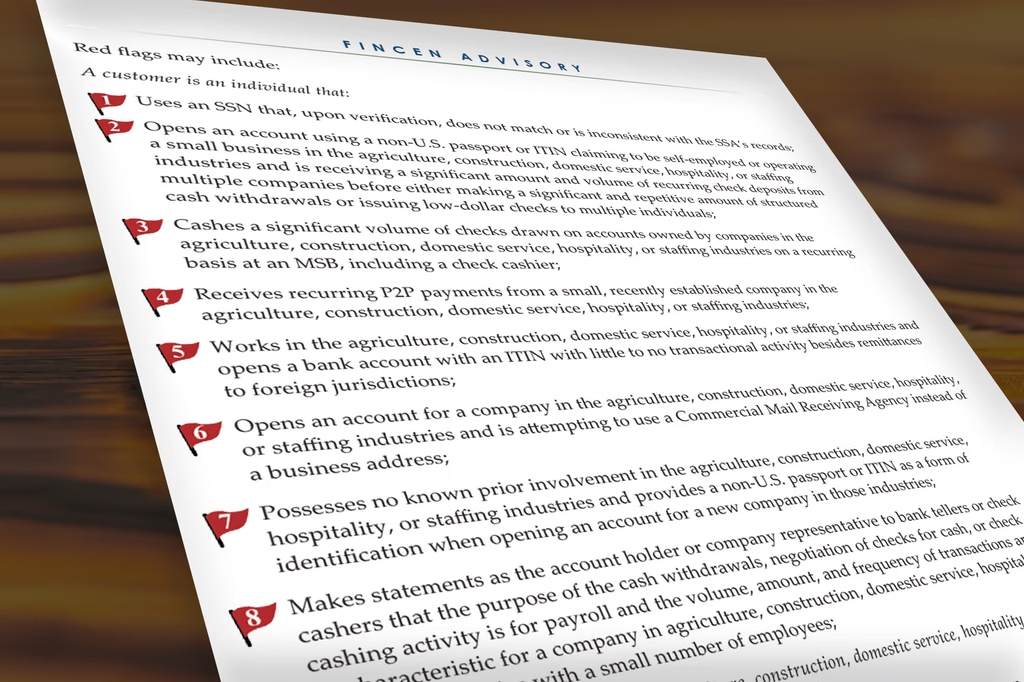
La mayor parte de las directrices está dirigida a empleadores, intermediarios laborales y empresas fantasma que manejan esquemas de nómina fuera de libros. No está dirigida a personas que depositan un cheque de pago y pagan el alquiler.
El aviso también es explícito en dos puntos. Ninguna señal de alerta por sí sola “debe tomarse de forma aislada”. Y los indicadores “no transmiten ni alteran ninguna obligación reglamentaria independiente”.”
Qué es un SAR y qué no es
Si un banco observa actividad que considera sospechosa, presenta un Informe de Actividad Sospechosa (SAR) con FinCEN. FinCEN pidió a los bancos que etiquetaran estos informes con el término clave `FINANCIALINTEGRITY-2026-A002`.
Un SAR es un informe confidencial dirigido a una oficina del Tesoro. No es una remisión de inmigración. La ley federal, sin embargo, prohíbe que su banco le diga si se ha presentado un informe SAR.
Las fuerzas del orden pueden acceder a los datos de los SAR, y las agencias de aplicación de la ley, en particular el DHS, han estado utilizando dichos datos en la aplicación de las leyes de inmigración. De hecho, el aviso alienta por separado a la población a denunciar empleadores a ICE, que contrata a trabajadores sin permiso.
Acción: Si su banco se pone en contacto con usted solicitándole documentos, anote exactamente qué se le pidió, quién lo pidió y la fecha, antes de responder a nada.
La pregunta sobre el ITIN, respondida con precisión
Aquí es donde equivocarse puede causar un daño real.
Los ITIN siguen siendo válidos para abrir una cuenta bancaria. Las reglas del Programa de Identificación de Clientes exigen un número de identificación, y un número de identificación de contribuyente cumple con esa regla. El aviso no cambió esto.
Lo que cambió es la forma en que se indica a los bancos que traten un número ITIN. El aviso dice que un ITIN utilizado “en lugar de un SSN o un documento de autorización de empleo válido” puede ser tratado como “un factor de riesgo que requiere la debida diligencia mejorada”.”
Lee eso con atención. La “diligencia debida reforzada” significa más preguntas.
Se indica a los bancos que evalúen un ITIN “a la luz de la totalidad de otros factores”, no por sí solo.
Solo 1 de las 8 señales de alerta individuales enumeradas involucra una cuenta de ITIN ordinaria. Esa advertencia también requiere trabajo en una industria específica y una cuenta con casi ninguna actividad además del dinero enviado al extranjero.
Idea clave: El error más perjudicial rara vez es la pregunta del banco. Es la respuesta en pánico. Cerrar cuentas o mover dinero rápidamente crea exactamente el patrón que la asesoría les dice a los bancos que vigilen.
Los préstamos y el crédito siguen reglas diferentes a las de su cuenta corriente
Dos cosas distintas ocurrieron este verano, y confundirlas causa un miedo innecesario.
Tu cuenta de depósitos (cuentas de cheques y de ahorros) se rige por las normas de identidad y contra el lavado de dinero.
Crédito ahora se rige por algo nuevo. El 8 de junio de 2026, la Oficina de Protección Financiera del Consumidor Declaración sobre la capacidad de pago y el estatus migratorio entró en vigor. Según la Ley de Verdad en los Préstamos, se establece que los prestamistas pueden obligado considerar el estatus migratorio al decidir si puede pagar una hipoteca o tarjeta de crédito.
La teoría es tajante: si los registros de un prestamista sugieren que usted podría ser expulsado del país, eso influye en sus ingresos futuros.

Luego, el 13 de julio de 2026, la FDIC, la OCC y la NCUA emitieron guía interagencial decirles a las instituciones que apliquen las prácticas existentes de riesgo crediticio a los prestatarios que no están autorizados para trabajar. La Reserva Federal no había emitido una direct orientación coincidente al momento de redactar este documento.
Ninguna de las dos acciones le indica a un banco que cierre su cuenta corriente. Ambas se refieren a préstamos.
En resumen: Espere más fricción en las solicitudes de préstamos y tarjetas de crédito que en la banca cotidiana. Si solicita una hipoteca este año, hable con un abogado antes de presentar la solicitud.
Sus derechos a cuentas bancarias de inmigrantes que no han cambiado
Los derechos de las cuentas bancarias de los inmigrantes siguen vigentes, pero una mayor inspección de las cuentas podría convertirse en la norma.
La verificación de identidad no es una verificación de ciudadanía. Las reglas del Programa de Identificación de Clientes exigen su nombre, fecha de nacimiento, dirección y un número de identificación. Ese número puede ser un Número de Seguro Social o un ITIN. Ninguna parte de estas reglas pregunta dónde nació.
Sus registros todavía requieren un proceso legal. Las agencias gubernamentales generalmente necesitan una citación judicial, una orden judicial u otro proceso adecuado para obtener sus registros bancarios. Esa es la Ley de Derecho a la Privacidad Financiera.
Tu dinero sigue siendo tuyo. Si un banco cierra su cuenta por cualquier motivo, debe devolverle sus fondos.
El estatus legal está expresamente excluido. El aviso de junio establece en sus propias definiciones que la población a la que se dirige no incluyen ciudadanos estadounidenses, residentes permanentes legales, o cualquier persona cuyo empleo esté autorizado por la ley.
Si sostienes un tarjeta verde o autorización de trabajo, el tema principal del aviso no es usted.
Una nota práctica si su estatus ha mejorado. Es posible que haya abierto la cuenta con un ITIN y posteriormente haya recibido un Número de Seguro Social. Es probable que su banco aún tenga registrado únicamente el ITIN, por lo que actualizar ese registro es un paso pequeño y sensato.
Idea clave: Los hogares con estatus migratorio mixto son los que causan más confusión. Una cuenta conjunta no transfiere el estatus migratorio de un titular al otro. Un cónyuge ciudadano estadounidense tampoco protege una cuenta de una revisión, ya que cada titular se evalúa en función de su propia información.
¿Puede ICE bloquear o embargar mi cuenta bancaria?
No basándose únicamente en el estatus migratorio.
El embargo de dinero en una cuenta bancaria es una acción de decomiso. Por lo general, requiere una orden judicial o un procedimiento de decomiso vinculado a una actividad delictiva sospechosa, y es un proceso legal separado de la expulsión. Estar detenido no congela por sí mismo su cuenta.
La “norma bancaria $3.000” no es una norma de inmigración.
Este causa verdadera confusión, así que aquí lo tienen claramente.
Digamos que compras un giro postal o un cheque de gerencia con efectivo, por un importe comprendido entre $3.000 y $10.000. En virtud de 31 CFR § 1010.415, el banco debe verificar su identidad y conservar un registro durante cinco años.
Es una norma de registro sobre compras en efectivo; se aplica a todos y lleva vigente desde hace décadas. No es nueva y no tiene nada que ver con la inmigración.
Todo reporte conlleva peligros elevados para aquellos extranjeros sin estatus. Como resultado del intercambio de registros que ahora está ocurriendo, la información recopilada por los bancos puede ser consultada por las fuerzas del orden, incluido el Departamento de Seguridad Nacional. Además, se están aplicando multas sin precedentes a los extranjeros, incluidas personas con órdenes de expulsión que no abandonan el país, y multas a los extranjeros que ingresaron al país sin inspección. La información de cuentas bancarias obtenida por el Departamento de Seguridad Nacional, que anteriormente se mantenía confidencial, ahora podría dar lugar a nuevas medidas para cobrar dichas multas.
Protecciones Adicionales para los Derechos de Cuentas Bancarias de Inmigrantes en New York
Tus derechos como inmigrante en materia de cuentas bancarias son más sólidos en New York que en la mayor parte del país. Esta es la información que los lectores de otras zonas no encontrarán.
El artículo New York prohíbe la discriminación en materia de crédito por motivos de situación migratoria. Ley Ejecutiva § 296-a hace que sea ilegal que un acreedor discrimine por una lista de características protegidas. Esa lista incluye expresamente “estado de ciudadanía o inmigración.”
Eso entra en clara tensión con las nuevas directrices federales. La ley estatal permite tomar decisiones crediticias basadas en “diferencias objetivas y respaldadas por hechos en la solvencia general de los solicitantes’. Los reguladores federales ahora dicen que la estatus migratorio puede influir en la capacidad de pago.
Aún no se ha resuelto judicialmente si ese razonamiento federal entra dentro de la excepción de la norma New York. Si eres un prestatario sujeto a la norma New York al que se le ha denegado la solicitud, esa cuestión pendiente es precisamente la razón por la que merece la pena revisar la denegación.

New York City se aplica a los establecimientos de uso público. La Ley de Derechos Humanos de la Ciudad de Nueva York prohíbe la discriminación basada en la condición de extranjero y de ciudadanía, real o percibida, por parte de los proveedores de alojamientos públicos en la ciudad. La Comisión de Derechos Humanos ha emitido orientación sobre la aplicación de la ley sobre la discriminación por estatus migratorio y origen nacional.
El Ley de Luz Verde superó su desafío federal. Limita la divulgación de tus datos por parte del DMV a las autoridades de inmigración sin una orden judicial o un auto del tribunal. Además, exige que el DMV te notifique si una agencia federal solicita tu información. El 23 de diciembre de 2025, un juez federal del Distrito Norte de New York desestimó el recurso presentado por el Departamento de Justicia contra dicha ley.
Acción: Si un banco New York te deniega la apertura de una cuenta o un crédito, o te pide documentos de ciudadanía, guarda todas las cartas y mensajes y ponte en contacto con un abogado de inmigración. Es posible que tenga derecho a reclamar en virtud de la ley municipal o estatal que las directrices federales no anulan.
Qué sigue
Dos fechas deciden qué parte de esto se consolida en normas vinculantes.
Alrededor del 15 de noviembre de 2026, el Departamento del Tesoro y los reguladores bancarios federales deben considerar cambios en las reglas relacionados con las tarjetas de identificación consular extranjeras. Si usted opera con un banco usando una identificación consular, esta es la fecha que debe tener en cuenta.
En el Congreso, el Ley Conozca a su Cliente Estadounidense (S. 4206) se presentó el 25 de marzo de 2026 y se remitió a la Comisión de Banca del Senado. El proyecto de ley exigiría la verificación de la ciudadanía o la situación legal de nuevo cuentas, al tiempo que se mantiene la normativa anterior para los clientes actuales. No se ha aprobado.
Por otra parte, varias resoluciones de tribunales federales han bloqueado el intercambio de datos de contribuyentes del IRS con ICE en virtud del acuerdo de 2025 entre ambos organismos. Ese litigio sigue en curso y se encuentra en fase de apelación, por lo que la situación puede cambiar rápidamente; de ahí que sea recomendable comprobar el estado de dicho litigio en lugar de dar por hecho nada.
Acción: Anota ya ambas fechas en tu calendario. Si operas con un ITIN o un documento de identidad consular, vuelve a consultar a mediados de agosto y a mediados de noviembre, en lugar de esperar a que te avise tu banco.
Preguntas frecuentes
¿La nueva orden ejecutiva exige que mi banco verifique mi ciudadanía?
No. La Orden Ejecutiva 14406 no impone un mandato universal de verificación de ciudadanía. Confirma que los bancos tienen la autoridad para solicitar información sobre el estado migratorio cuando ya están presentes otros indicadores de riesgo. Ese es un enfoque basado en el riesgo, no una norma general. Su banco no está obligado a revisar la ciudadanía de todos los clientes existentes. Los informes de marzo de marzo de 2026 describían un borrador anterior que habría exigido dicha recopilación; ese requisito no está en la orden firmada.
¿Todavía puedo abrir una cuenta bancaria con un ITIN?
Sí. Un ITIN sigue siendo un número de identificación válido según las reglas del Programa de Identificación de Clientes, y el aviso de junio de 2026 no prohibió las cuentas con ITIN. Alienta a los bancos a tratar un ITIN utilizado en lugar de un número de Seguro Social como un factor de riesgo entre muchos. Eso puede significar preguntas adicionales o solicitudes de documentos. Los requisitos aún varían según la institución, por lo que vale la pena llamar con anticipación para confirmar lo que solicita una sucursal específica.
¿Me denunciará mi banco a las autoridades de inmigración?
Su banco puede presentar un Informe de Actividad Sospechosa ante FinCEN si considera que la actividad es sospechosa. Tiene prohibido legalmente informarle si lo hace. Un SAR en sí mismo no es una remisión de inmigración, aunque las agencias del orden público pueden acceder a esos datos. Por separado, sus registros bancarios reales generalmente aún requieren una citación judicial u orden judicial bajo la Ley de Privacidad de los Registros Financieros antes de que una agencia gubernamental pueda obtenerlos.
¿Qué debo hacer si mi banco me pide nuevos documentos?
No ignore la solicitud y no la responda el mismo día. Anote exactamente qué se pidió, quién lo pidió y cuándo. Luego, haga que un abogado de inmigración lo revise antes de entregar cualquier cosa. Es posible que el banco esté realizando una diligencia debida de rutina en lugar de actuar por un requisito legal. Proporcionar documentos que no estaba obligado a entregar puede crear problemas que son difíciles de deshacer más adelante.
¿Puede mi banco cerrar mi cuenta debido a mi estatus migratorio?
Los bancos conservan una amplia discrecionalidad para cerrar cuentas, y esa discrecionalidad ya existía antes de esta orden. Lo que ha cambiado es que ahora las autoridades reguladoras fomentan un mayor escrutinio de determinados patrones. Esto hace que los cierres sean más probables, incluso sin que exista una norma que los exija. Si te cierran la cuenta, el banco debe devolverte tus fondos. En New York, un cierre o una denegación relacionados con la situación migratoria también pueden dar lugar a reclamaciones en virtud de la legislación estatal o municipal.
¿Qué pasa con mi cuenta bancaria si soy detenido o deportado?
Su cuenta no se cierra automáticamente y el dinero que contiene sigue siendo suyo. El problema práctico es el acceso. Desde la detención o desde el extranjero, es posible que no pueda administrar la cuenta y la inactividad puede eventualmente activar la condición de inactividad o el cierre según la ley estatal. Por esto es importante la planificación de contingencias financieras: una persona de confianza con la debida autoridad, como un poder legal, puede actuar en su nombre. Establézcalo antes de necesitarlo, no durante una crisis.
¿Cerrar mi cuenta me protege?
No, y puede empeorar las cosas. Cerrar una cuenta no borra su historial bancario, ya que las instituciones conservan registros durante años según la ley federal. También pierde documentación que puede respaldar un caso de inmigración y pierde historial crediticio. Es posible que lo empujen a realizar transacciones exclusivamente en efectivo que son más difíciles de demostrar. Los cierres repentinos de cuentas y el movimiento rápido de dinero también se asemejan a los patrones que el aviso de junio indica a los bancos que deben vigilar.
Qué hacer a continuación
La amenaza sobre la que escribimos en marzo se ha materializado. Esto es lo que realmente ayuda ahora.
Esta semana:
- Confirme qué identificación tiene su banco registrada, especialmente si su estado ha cambiado desde que abrió la cuenta
- Si dependes de una sola institución para todo, abre una segunda cuenta en otra parte
Este mes:
- Reúna los extractos bancarios, las declaraciones de impuestos y los recibos de pago, y guarde copias en un lugar donde pueda acceder a ellas rápidamente
- Si estás planeando una hipoteca o una solicitud de crédito importante, busca asesoramiento antes de solicitar; aquí es donde las normas realmente se endurecieron.
En curso:
- Lee todo lo que te envíe tu banco y haz que revisen las solicitudes de documentos inusuales antes de responder
- Observe las fechas de agosto y noviembre arriba, y lea nuestro actualización sobre la aplicación de las leyes de inmigración para una visión más amplia
¿Necesitas ayuda con inmigración?
Oltarsh & Associates lleva más de 50 años defendiendo los derechos de los inmigrantes en New York. Si tu banco te ha pedido documentos que acrediten tu ciudadanía, te ha denegado un crédito o te ha cerrado la cuenta, conviene revisar esa decisión antes de aceptarla.
Llame al (212) 944-9420 o contáctenos para una evaluación gratuita de su caso.
Este artículo se proporciona únicamente con fines informativos, y no constituye asesoramiento jurídico ni crea una relación abogado-cliente con Oltarsh & Associates, P.C. ni con ninguno de sus abogados, empleados y/o agentes. Las leyes y políticas cambian, y la información aquí contenida puede no reflejar los desarrollos legales más actuales. Usted puede Contacto sobre su situación concreta.



 English
  Español