


The EB-5 Reform and Integrity Act of 2022 (also known as the EB-5 Reform Act) reauthorized the regional center program for five years, raised the minimum investment to $800,000 for qualifying projects, and created dedicated visa reserves that remain current for all nationalities, including investors born in China and India.
Since enactment on March 15, 2022, EB-5 investment has surged. The program generated nearly $3.9 billion in capital in fiscal year 2024. Rural projects grew by more than 700% in number and nearly 1,500% in investment volume.
The program’s reauthorization expires September 30, 2027, and a critical grandfathering deadline arrives one year earlier on September 30, 2026. Petitions filed on or before that date receive statutory protection even if Congress fails to reauthorize the program or changes the rules after 2027.
What You’ll Learn
- What changed under the EB-5 Reform and Integrity Act, including new investment amounts, visa set-asides, and regional center requirements
- Why set-aside categories remain current for all nationalities, while non-set-aside categories face retrogression
- What the September 30, 2026, grandfathering deadline protects, and why petitions filed after that date face maximum uncertainty
- How concurrent I-526E/I-485 filing allows eligible investors to receive 5-year work and travel permits immediately upon filing
What the EB-5 Reform and Integrity Act Changed (March 2022)
The EB-5 Reform and Integrity Act of 2022 (RIA), enacted March 15, 2022, reauthorized the Regional Center Program through September 30, 2027.

Investment minimums rose to $800,000 for TEA projects and $1,050,000 for all others. Both adjust for inflation every five years.
Three visa set-aside categories also now reserve portions of annual EB-5 visas: 20% for rural projects, 10% for high-unemployment areas, and 2% for infrastructure investments.
The RIA also created the EB-5 Integrity Fund, requiring regional centers to pay $20,000 annually for USCIS investigations and audits. New protections include USCIS-only TEA determinations valid for two years and priority processing for rural projects.
| Category | Before RIA | After RIA (March 2022) |
|---|---|---|
| Investment Amount (TEA) | $500,000 | $800,000 (inflation-adjusted) |
| Investment Amount (Non-TEA) | $1,000,000 | $1,050,000 (inflation-adjusted) |
| Regional Center Authorization | Lapsed | Reauthorized through Sept. 30, 2027 |
| Visa Set-Asides | None | 20% rural, 10% high-unemployment, 2% infrastructure |
| TEA Determination | State agencies | USCIS only |
Investment Amounts Under the EB-5 Reform Act: $800,000 vs $1,050,000
The standard minimum investment is $1,050,000. The reduced investment of $800,000 applies to three categories: rural areas, high-unemployment areas, and infrastructure projects (even when not located in a TEA).
TEA determinations are now handled exclusively by USCIS. The designation remains valid for 2 years from the project request filing and can be renewed in 2-year increments.
For high-unemployment areas, USCIS uses a narrower “bullseye” approach from the 2019 regulations. This census tract-based method prevents the gerrymandered regions that previously allowed non-qualifying areas to claim TEA status.
The $250,000 spread between TEA and non-TEA investments creates a clear incentive. Capital flows toward underserved communities — exactly what Congress intended.
Visa Set-Asides: Why Rural and High-Unemployment Categories Move Faster
The RIA reserves a portion of annual EB-5 visas for specific project types. 20% go to rural areas, 10% to urban high-unemployment areas, and 2% to infrastructure projects.
These set-aside categories remain current for all nationalities as of 2026. That includes investors from China and India who face multi-year backlogs in non-set-aside categories.
Unused reserves carry over to the next year. In the third unused year, those visas become available without reservations.
Rural project I-526E petitions receive priority processing from USCIS, with typical decisions in approximately 6 months. The contrast is stark: rural and high-unemployment investors can proceed to conditional residency within months, while others may wait years.
Regional Center Reauthorization: What Investors Must Verify
The Regional Center Program lapsed in June 2021 and was reauthorized on March 15, 2022. Every pre-2022 regional center had to apply for new authorization.

Regional centers that fail to meet the new integrity requirements lose their designation entirely, terminating all pending investor petitions associated with that center.
The EB-5 Integrity Fund requires each regional center to pay an annual fee: $20,000 standard, or $10,000 for centers with 20 or fewer investors. Payment is due October 1. USCIS must terminate any center that doesn’t pay within 90 days — meaning non-payment by December 30 triggers mandatory termination under INA 203(b)(5)(J)(iv)(II).
In our work with EB-5 investors, we always verify three things before recommending a regional center: a current RCID number beginning with “RC,” active listing on USCIS’s authorized regional center list, and confirmed Integrity Fund payment for the current fiscal year.
Concurrent Filing and Work Permits: Living in the U.S. While Your Petition Is Pending
Eligible EB-5 investors can file their I-526E petition and I-485 [adjustment of status application](https://www.oltarsh.com/adjustment-of-status-vs-consular-processing-choosing-your-path-to-a-green-card/) simultaneously. You apply for your green card and permission to live in the United States at the same time. The impact of the Administration’s new adjustment of status memorandum remains to be determined. The memo claims that there is a discretionary factor that must be considered.
Eligibility for adjustment under the INS laws is for qualified individuals physically present in the United States with an immigrant visa number available. For investors in set-aside categories, visa numbers remain current regardless of country of birth.
Upon filing, you receive an Employment Authorization Document (EAD) and if requested and approved, an Advance Parole (AP) document allowing for travel. These permits let you work, be self-employed, study, and travel abroad while your petition is pending — eliminating years of waiting outside the United States.
The INA Section 245(k) provision now applies to EB-5 investors. It forgives up to 180 days of status violations when applying for adjustment, including unauthorized employment. Again, how this will interface with the new memo on adjustment is still being determined.
The September 30, 2026, Grandfathering Deadline: What It Protects
The grandfathering deadline of September 30, 2026, locks in your eligibility under current EB-5 rules. File your I-526 or I-526E petition by that date to secure protection.
Your petition remains protected even if the Regional Center Program lapses, Congress changes immigration laws, or investment thresholds increase after you file. USCIS must continue processing both your I-526E and eventual I-829 petitions regardless of what happens after September 2026.
Petitions filed after September 30, 2026, carry a significant risk. You could face program suspension, new rules, higher investment amounts, or processing delays if Congress doesn’t reauthorize beyond September 30, 2027.
In practice, the one-year gap between the grandfathering cutoff and program expiration leaves investors who file between October 2026 and September 2027 exposed without statutory protection.
Job Creation Requirements Under the Reform and Integrity Act
Every EB-5 investment must create 10 permanent full-time jobs for U.S. workers. Regional center investors can satisfy this through indirect job creation — jobs generated by the project’s economic activity.
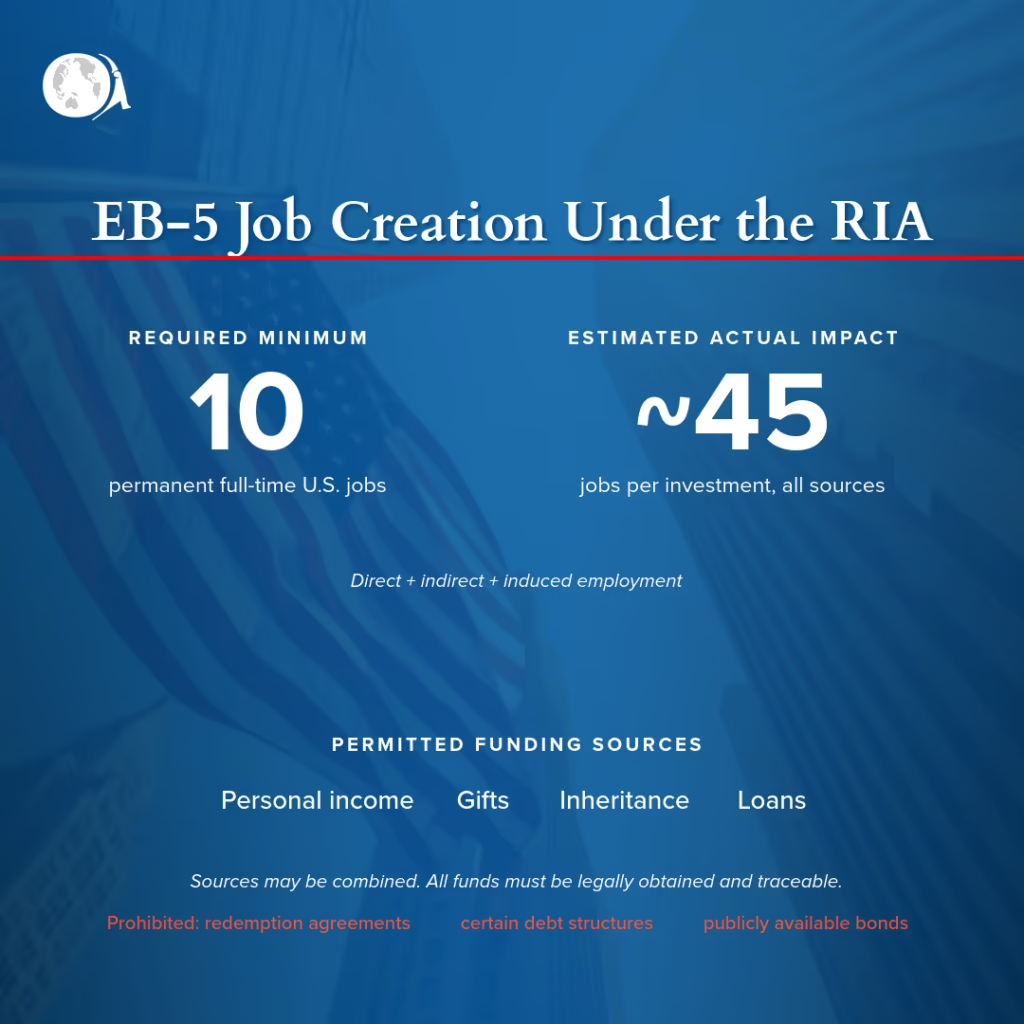
According to Invest In the USA estimates, each EB-5 investment creates approximately 45 jobs when accounting for both direct and indirect employment impact.
You’ll typically invest half your capital before filing your I-526E petition, with the remainder due within one year. All funds must be sourced and documented at filing, regardless of when you transfer them.
The RIA permits investment funds from personal income, gifts, inheritances, and loans. You can combine sources. Each must be legally obtained and traceable. The Act prohibits redemption agreements, specific debt structures, and purchases of publicly available municipal or for-profit bonds.
EB-5 Investment Growth Under the Reform Act: $2.7 Billion in Six Months
FY2024 brought nearly $3.9 billion in EB-5 capital. The first half of FY2025 has already generated over $2.7 billion.
The most dramatic shift happened in rural communities. In the program’s first 32 years, fewer than 15 EB-5 projects were located in rural areas. The first three years after RIA enactment brought over $2.2 billion to rural communities — a nearly 1,500% increase in investment volume.
Reserved visa allocations and priority processing are driving capital to previously underserved areas. When rural projects offer both faster visa processing and lower investment thresholds, investors respond.
Frequently Asked Questions
What is the EB-5 Reform and Integrity Act of 2022?
Legislation enacted March 15, 2022, that reauthorized the EB-5 Regional Center Program through September 30, 2027. It set investment amounts at $800,000 for Targeted Employment Areas and $1,050,000 for non-TEAs. It created visa set-asides for rural (20%), high-unemployment (10%), and infrastructure (2%) projects. It established the EB-5 Integrity Fund and granted rural investors priority processing with decisions typically within 6 months.
How long does the EB-5 process take under the Reform Act?
Rural project I-526E petitions receive priority processing with typical decisions in approximately 6 months. Set-aside categories remain current for all nationalities, meaning no visa backlogs for rural, high-unemployment, or infrastructure investors. Upon filing, you receive 5-year work and travel permits to live and work in the U.S. while awaiting your green card.
What’s the difference between the $800,000 and $1,050,000 investment amounts?
You invest $800,000 if your project qualifies as a Targeted Employment Area — a rural area, high-unemployment area, or infrastructure project. You invest $1,050,000 for non-TEA locations. USCIS determines high-unemployment TEAs using a “bullseye” definition valid for 2 years, renewable in 2-year increments. Both amounts increase with inflation every 5 years. Infrastructure projects qualify for $800,000 even if not in a traditional TEA.
What happens if I file my EB-5 petition after September 30, 2026?
You lose grandfathering protection. Only petitions filed on or before September 30, 2026, are guaranteed continued processing if the Regional Center Program expires September 30, 2027. Late filers face exposure to program lapses, new rules, increased investment thresholds, or suspension if Congress doesn’t reauthorize.
Can I combine different sources of funds for my EB-5 investment?
Yes. You can combine personal income, gifts, inheritances, and loans from family, friends, businesses, or banks. All funds must be legally obtained and traceable. You typically invest half before filing your I-526E petition and the remainder within a year. Gifted and loaned funds are permitted. Redemption arrangements, certain debt arrangements, and publicly available bond purchases are prohibited.
How do I verify whether a regional center has been properly reauthorized?
Confirm the center has paid its annual EB-5 Integrity Fund fee ($20,000 standard, $10,000 for centers with 20 or fewer investors). Payments are due October 1 through Pay.gov using the center’s RCID number (always begins with “RC”). USCIS must terminate any center that doesn’t pay within 90 days. Centers that haven’t paid by December 30 face termination steps.
What is the difference between set-aside and non-set-aside EB-5 categories?
Set-aside categories reserve specific visa percentages: 20% rural, 10% high-unemployment, 2% infrastructure. These remain current for all nationalities. Non-set-aside categories compete for remaining visas and may face country-specific backlogs. Unused set-aside visas carry over annually. In the third unused year, they become available without reservations.
What to Do Next
The RIA created structural advantages that expire based on specific dates. Your timeline determines which protections apply.
This week:
- Verify whether your target project qualifies for a set-aside category (rural, high-unemployment, or infrastructure) and the $800,000 threshold.
- Confirm your regional center has current RIA authorization and Integrity Fund compliance — centers that miss the December 30 payment deadline face termination.
This month:
- Assess whether your petition timeline allows filing before the September 30, 2026, grandfathering deadline. Petitions filed after that date lose protection if Congress fails to reauthorize beyond 2027.
- Compare visa availability between set-aside and non-set-aside categories, especially if you were born in China or India.
Ongoing:
- Monitor USCIS processing times and visa bulletin changes. Rural petitions currently receive decisions in approximately 6 months.
- Track Congressional action on reauthorization as September 30, 2027, approaches.
This article is provided for informational purposes only, and does not constitute legal advice nor does it create an attorney–client relationship with Oltarsh & Associates, P.C. or any of its lawyers, employees and/or agents. Laws and policies change, and information here may not reflect the most current legal developments. You can contact us about your specific situation.



 English
  Español