

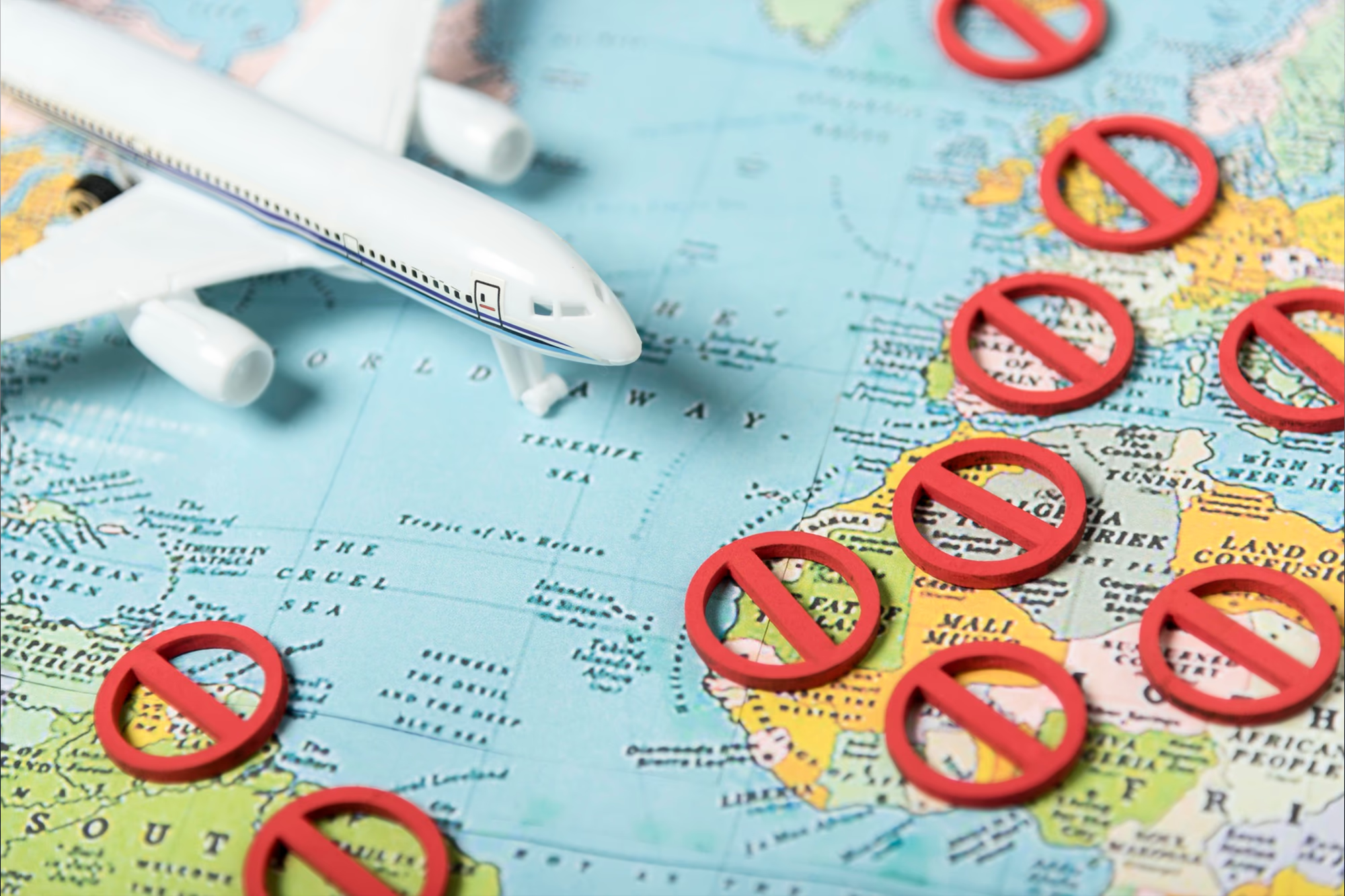
At Oltarsh & Associates, P.C., we have been hearing the same anxious questions from clients since the new December 2025 proclamation, coming on the heels of the June 2025 proclamation, was announced: “Is my country on the list?”, “Can I still travel?”, and “Will this ruin my case?” The newest Travel Ban Expansion proclamation, issued on December 16, 2025, turns the existing travel bans into the broadest entry restrictions we have seen in years and significantly expands who can be kept out of the United States.
In this article, we explain, in plain language, how the 2025 Trump travel bans work, which countries our clients need to worry about, and what options may still exist if you or a family member is affected.
The Big Picture: What This New Proclamation Does
The December 2025 proclamation does not stand alone. It builds on the June 2025 travel ban and extends restrictions to 39 countries. For some nationalities, almost all new visas, both immigrant and non-immigrant, are now suspended; for others, only certain visa types—such as visitor or student visas—are blocked.
When we look at how this plays out in real cases, the impact is immediate and enormous:
- Family members abroad are finding their immigrant visa interviews cancelled or refused.
- Students and workers are being told they are no longer eligible for visas they used in the past.
- Clients inside the United States are afraid to travel at all, worried they may not be allowed back in.
We start by categorizing countries into two groups: full bans and partial bans.

Countries Under A Full Travel Ban Expansion
Nationals from a country with a full ban, entry as both immigrants and non-immigrants is fully suspended. As a consequence, most new visas will be denied, with only narrow exceptions and waivers available.
Under the combined June and December 2025 orders, full bans now apply to nationals of:
- Afghanistan
- Burkina Faso
- Burma (Myanmar)
- Chad
- Republic of the Congo
- Equatorial Guinea
- Eritrea
- Haiti
- Iran
- Laos
- Libya
- Mali
- Niger
- Sierra Leone
- Somalia
- South Sudan
- Sudan
- Syria
- Yemen
The proclamation also fully bans individuals traveling on Palestinian Authority-issued travel documents, even if they do not otherwise hold a listed passport.
For clients from these countries, we are seeing visa applications refused at their visa interviews unless there is a clear exemption or a strong waiver case. This is notwithstanding that the policy results in family separation and longstanding plans and efforts to navigate the complex immigration systems legally are suddenly put on hold.
Countries Facing Partial Bans And Limited Visas
Those individuals from partially banned countries face restrictions in both immigrant visas and important non-immigrant categories, including tourist and some student or exchange categories, which are included in the ban.
The partial bans currently affect nationals of, among others:
- Angola
- Antigua and Barbuda
- Benin
- Burundi
- Cuba
- Côte d’Ivoire (Ivory Coast)
- Dominica
- Gabon
- The Gambia
- Malawi
- Mauritania
- Nigeria
- Senegal
- Tanzania
- Togo
- Turkmenistan
- Tonga
- Venezuela
- Zambia
- Zimbabwe
When a client from one of these countries contacts our office, we do not assume that “everything is banned.” Instead, we look carefully at the specific visa category, timing, and travel history to determine whether the partial ban applies or whether there is still a pathway forward.

How These Bans Affect People Who Already Have Status
Many of our clients are not simply applying from abroad; they are already living, studying, or working in the United States. For them, the question is not only “Can I get in?” but also “Will this hurt my existing case?”
From our perspective, these are the main points:
- Green card holders: Lawful permanent residents from banned countries are generally exempt from the entry bans, but they can still face aggressive questioning, delays, and secondary inspection when they travel. We have more information on the restrictions in our article: Green Card Restrictions Affected by Travel Ban 2025
- Dual Nationals traveling on passports of non-listed countries: Individuals who hold passports of listed and non-listed countries can generally travel using the passport of a non-listed country
- Current visa holders: People with valid visas issued before key effective dates may, in some circumstances, still be able to travel, but we advise clients to speak with us before leaving the country, especially if they come from a full‑ban country. Likely, such individuals will face heightened screening
- The bans impact immigrant visas. Before proceeding to an immigrant visa interview for immigrants from banned countries, speak to counsel to avoid denials
- Waivers: The proclamation affords waivers on a case-by-case determination by both consular officers and agencies if entry is deemed in the national interest, or would suffer undue hardship, and who pose no security risk.
The impact of these bans is enormous. It is designed to stop prospective travelers to the US, including tourists, student workers, immediate family members, and refugees. Foreign nationals from the 39 banned countries will face obstacles in having their F, M, and J visas approved. These visas are explicitly suspended for most visa applicants. Family-based relative petitions from banned countries will be delayed or outright denied. This is the case despite many waiting years for their immigrant visas. Businesses with employees from banned countries may see consular processing frozen for such employees. Refugees will face restrictions, even if and despite sometimes being family members of those with legal status in the United States and otherwise eligible.
It has been estimated that the ban can impact an enormous number of individuals and have substantial economic costs to the nation.
Our Advice If You Think You Are Affected
As a firm, we have started to give a common set of recommendations to people who may be affected by the 2025 Trump travel bans. These are not one‑size‑fits‑all rules, but they are good starting points for a conversation.
1. Do not make major travel plans without legal advice.
If you are from a banned or partially banned country, leaving the United States may be riskier than staying—even if you have traveled safely in the past. We often advise clients to pause and let us review their situation before they buy tickets or schedule international trips.
2. Get clear on your country, visa type, and timing.
We always ask three questions at intake: What is your nationality? What status or visa do you hold (or hope to obtain)? When do you need to travel or file? The answers determine whether the ban applies and how strict it is in your case.
3. Understand waivers realistically.
We do pursue waivers where appropriate, but we are honest with clients: waivers require detailed evidence, take time, and are granted sparingly. If a waiver is your only route, we will tell you that clearly and help you build the strongest record possible.
4. Explore alternatives when they exist.
In some matters, we help clients look at alternate visa categories, different filing strategies, or humanitarian options that are not directly blocked by the travel bans. In others, we may discuss whether waiting or litigating makes more sense.
Our goal is not to give false hope, but to help you see the full range of options, including paths you may not have considered.
How Oltarsh & Associates, P.C. Can Help You Navigate This
Oltarsh & Associates, P.C. has practiced immigration law in New York City for decades, representing families, workers, students, and businesses across a wide range of cases. In 2025, we have been advising clients on both the June travel ban and the December 2025 Trump travel ban expansion, including how these policies interact with family‑based immigration, business visas, deportation defense, and waivers.
When you contact our office about the travel ban expansion, we can:
- Review whether your nationality and visa type fall under a full or partial ban
- Explain honestly how the bans may affect your case, including any increased risk at the border or in USCIS decisions
- Develop a strategy tailored to you, whether that means pursuing a waiver, adjusting status inside the United States, changing your travel plans, or exploring other forms of relief
If you have questions about how the 2025 Trump travel ban expansion could affect you or a family member, you can reach Oltarsh & Associates, P.C. by calling us at (212) 944-9420 or using the contact form on our website. We are here to help you understand your options and make informed, strategic decisions in a very uncertain time.
This article is provided for informational purposes only, and does not constitute legal advice nor does it create an attorney–client relationship with Oltarsh & Associates, P.C. or any of its lawyers, employees and/or agents. Laws and policies change, and information here may not reflect the most current legal developments. You can contact us about your specific situation.


 English
  Español