

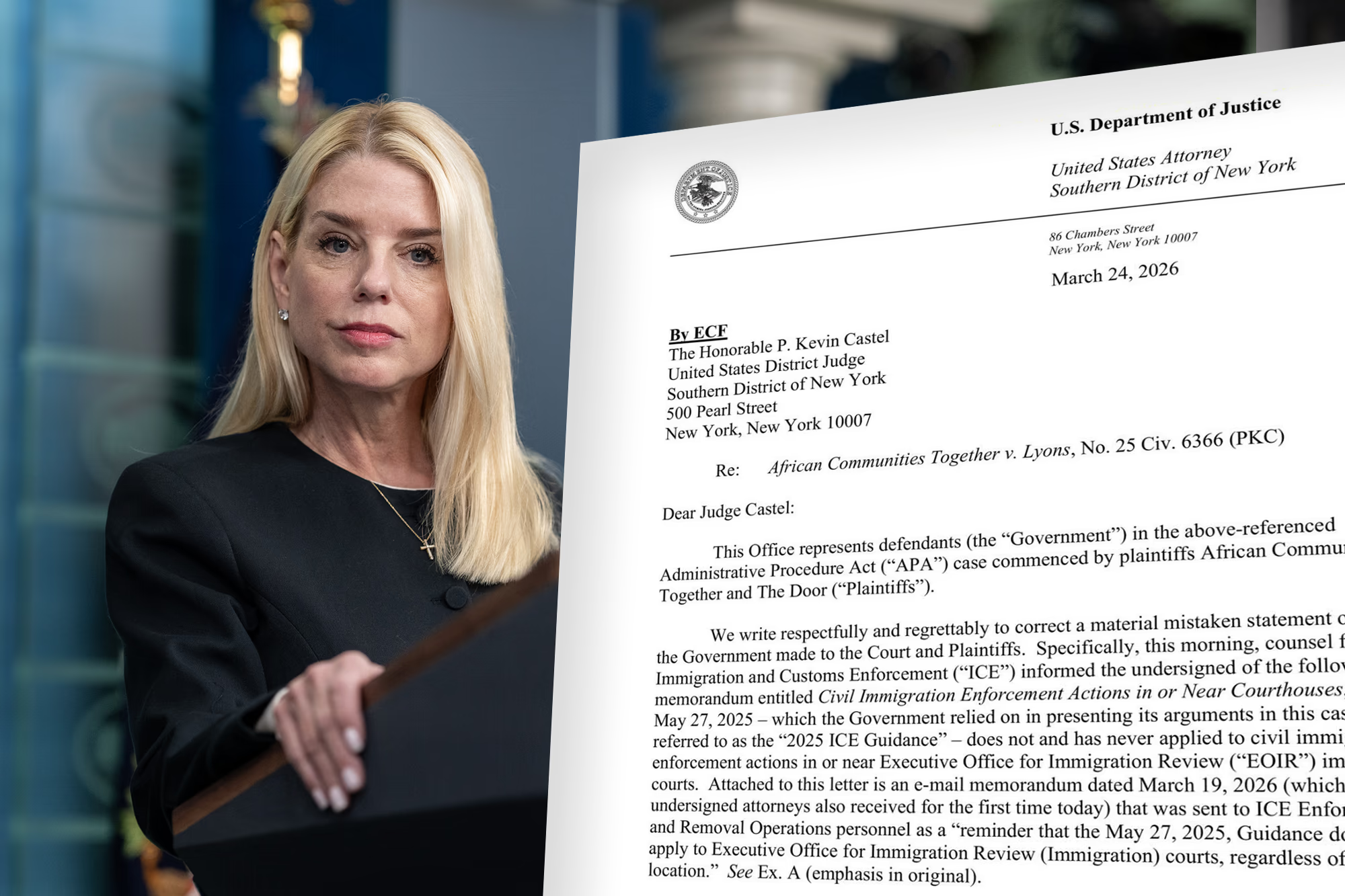
If you have an upcoming immigration court hearing, you may have heard alarming news: the U.S. Department of Justice admitted in federal court that it had been citing the wrong legal authority to justify ICE courthouse arrests for over a year.
That’s a significant legal development. But here’s what you need to know right now: Immigration and Customs Enforcement is still making arrests. And you are still required to attend your hearings.
Here’s what happened, what it means, and what you should do.
What the DOJ Admitted About ICE Courthouse Arrests
On March 25, 2026, DOJ attorneys told U.S. District Judge Kevin Castel that they had mistakenly relied on a May 2025 ICE memo to defend courthouse arrests at EOIR immigration hearings. The problem? That memo was never meant to apply to immigration courts. It applied only to regular civilian courthouses.
Immigration and Customs Enforcement’s own counsel had given DOJ lawyers the wrong interpretation. That error was then used to justify the policy for over a year.
The government’s own lawyers called it “a material mistaken statement of fact.”
This is not a minor procedural slip. Courts have been ruling on this policy, and people’s lives have been affected — based on a legal foundation that has now collapsed in open court.
What Has NOT Changed
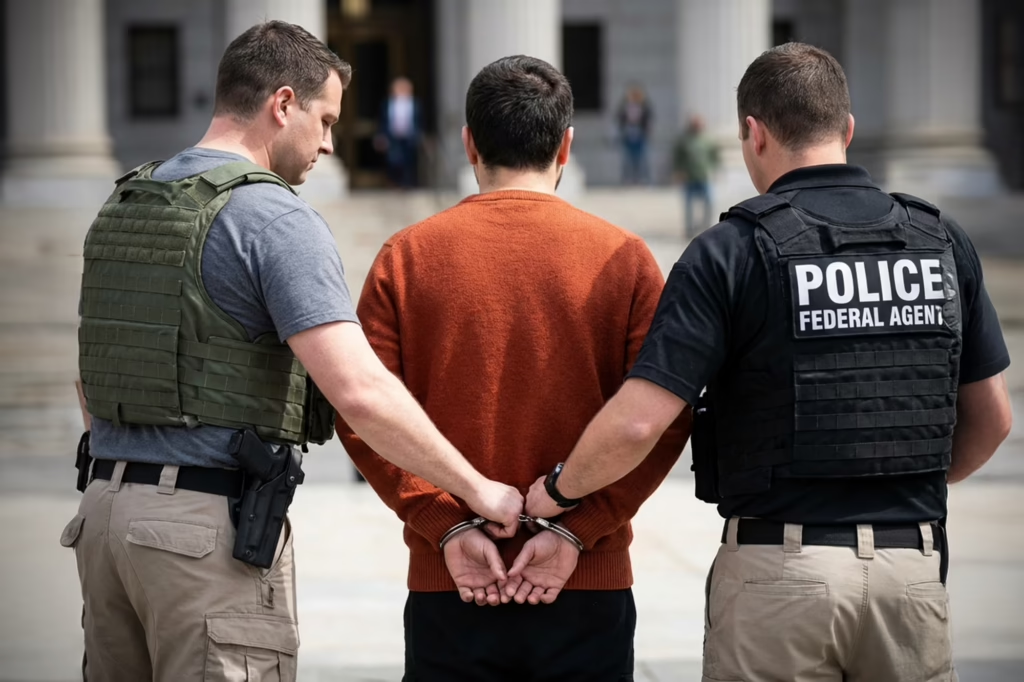
Despite the legal embarrassment, DHS confirmed almost immediately that immigration enforcement policy will not change. ICE agents continue to operate inside and around immigration court facilities. Arrests at immigration hearings are ongoing.
This is critical: the fact that the legal basis was flawed does not automatically protect you. Until a court issues a binding injunction halting courthouse arrests, or until DHS formally changes its policy, the risk remains real.
What ICE Courthouse Arrests Mean If You Have a Hearing Coming Up
As an immigration attorney, I want to be direct: do not skip your hearing.
Missing a scheduled immigration court date can result in an automatic removal order entered against you in absentia. That outcome forecloses possibilities, and an order of removal makes a foreign national easily removable. Without an order of removal, at least there may be a possibility of obtaining liberty through Federal Court Action, specifically through a Habeas Corpus. There are fewer grounds of defense with an order of removal.
In our work with clients facing hearings during this enforcement climate, we focus on both legal preparation and physical safety planning. Here is what I recommend:
- Bring your attorney or have representation. An attorney’s presence significantly affects how ICE agents operate in a courthouse setting.
- Know your rights before you go. You have the right to remain silent. You are not required to answer questions about your immigration status beyond what is asked inside the courtroom.
- Do not bring extra documents that could be used against you. Travel documents, foreign passports, or other papers should not be carried unless specifically required for your hearing.
- Have an emergency contact ready. Make sure a trusted person knows your hearing date, time, and location. They should contact your attorney immediately if you do not check in after.
- Plan your route. ICE arrests often occur outside the courthouse — in parking lots, on sidewalks nearby, or at transit stops. Be aware of your surroundings before and after your hearing.
Key Insight: In practice, the clients most at risk are those who attend hearings without legal representation. Having an attorney present doesn't guarantee safety — but it changes the calculus for enforcement officers on the ground.
The Bigger Picture
The DOJ’s admission is part of an active federal lawsuit. Judge Castel has ordered the government to preserve all records related to courthouse arrests. This case is far from over.
There is a real possibility that a court will eventually issue relief that limits or prohibits these arrests. But we are not there yet.
Until a binding court order is issued, the legal landscape remains unchanged for anyone with a pending hearing.
We are watching this case closely and will update our clients as developments unfold.
Frequently Asked Questions
Can ICE arrest me at my immigration hearing?
Yes. Despite the DOJ’s recent admission that its legal justification was flawed, DHS has confirmed it will continue the practice until a court orders otherwise.
Should I still attend my immigration court date?
Yes. Missing your hearing can result in a removal order issued in your absence. That order is extremely difficult to reverse. The risk of missing court may foreclose relief in the future.
What should I do if ICE approaches me at or near immigration court?
Remain calm. You have the right to remain silent. Do not answer questions about your immigration status. Ask immediately if you are free to leave. If detained, do not sign anything without speaking to your attorney first. If detained, it is critical to reach out to an attorney as quickly as possible in the event that Federal action is viable.
What rights do I have if I am arrested at immigration court?
You have the right to contact an attorney. You have the right to a bond hearing in most cases. Do not waive any rights or sign any documents without legal counsel present.
Can Oltarsh & Associates help me prepare for an upcoming hearing?
Yes. We work with clients to prepare not only their legal case but also a safety plan for attending hearings during the current enforcement climate. Contact us before your next hearing date.
Have an upcoming immigration hearing and concerned about your safety? Contact Oltarsh & Associates today for a consultation. We are here to help you navigate this with clarity and confidence.
This article is provided for informational purposes only, and does not constitute legal advice nor does it create an attorney–client relationship with Oltarsh & Associates, P.C. or any of its lawyers, employees and/or agents. Laws and policies change, and information here may not reflect the most current legal developments. You can contact us about your specific situation.



 English
  Español